If you want a Queens neighborhood that feels quietly distinct from the rest of the city, Douglaston tends to stand out fast. You can see it in the winding streets, the bay views, the historic houses, and the small station-area core that gives parts of the neighborhood an almost village-like rhythm. If you are exploring where to live, invest your time, or simply understand what makes this corner of Queens so appealing, this guide will walk you through the architecture, waterfront setting, and everyday feel that define Douglaston. Let’s dive in.
What Makes Douglaston Different
Douglaston sits in northeastern Queens within Community District 11, and it is best understood as a neighborhood made up of several distinct micro-areas rather than one uniform place. The community profile describes it as a largely tree-lined, single-family neighborhood, with the area north of Northern Boulevard near the station serving as the small commercial core and the primary spot with several apartment buildings.
That layered structure matters when you are getting to know the area. The waterfront peninsula, the inland historic sections, and the station-centered core each offer a different streetscape and housing pattern, yet they still feel connected by scale, greenery, and a quieter residential character.
Historic Character Shapes the Neighborhood
One of Douglaston’s strongest draws is that its historic identity is still visible in the built environment. Planning and preservation sources consistently point to the area’s established low-density pattern and to efforts aimed at keeping future change in scale with the surrounding neighborhood.
For you as a buyer or homeowner, that means Douglaston is not just historic in name. Its street layout, home styles, setbacks, and mature landscaping all work together to create a strong sense of continuity.
Douglas Manor’s Planned Village Feel
Douglas Manor is the neighborhood’s most recognized historic section. The Douglaston and Little Neck Historical Society describes it as a 1906 railroad and garden suburb that remains largely intact, with about 550 single-family homes, a shared waterfront promenade, and a deliberately village-like street pattern.
That planning approach still shows today. The Manor developed as an early 20th-century planned suburb adapted from a 19th-century estate, and the combination of topography, winding streets, varied homes, and landscaped surroundings gives it a very distinct identity.
Douglaston Hill’s Landmark Setting
South of the Manor, Douglaston Hill adds another historic layer. City Planning places it between Alley Pond Park and Udall’s Cove, and Landmarks Preservation Commission materials note that the district was designated in 2004 and amended in 2007.
This section contains 31 wood-frame homes built between 1890 and 1930. The result is a smaller landmark area with its own architectural texture, adding depth to Douglaston’s broader historic story.
Douglaston Architecture at a Glance
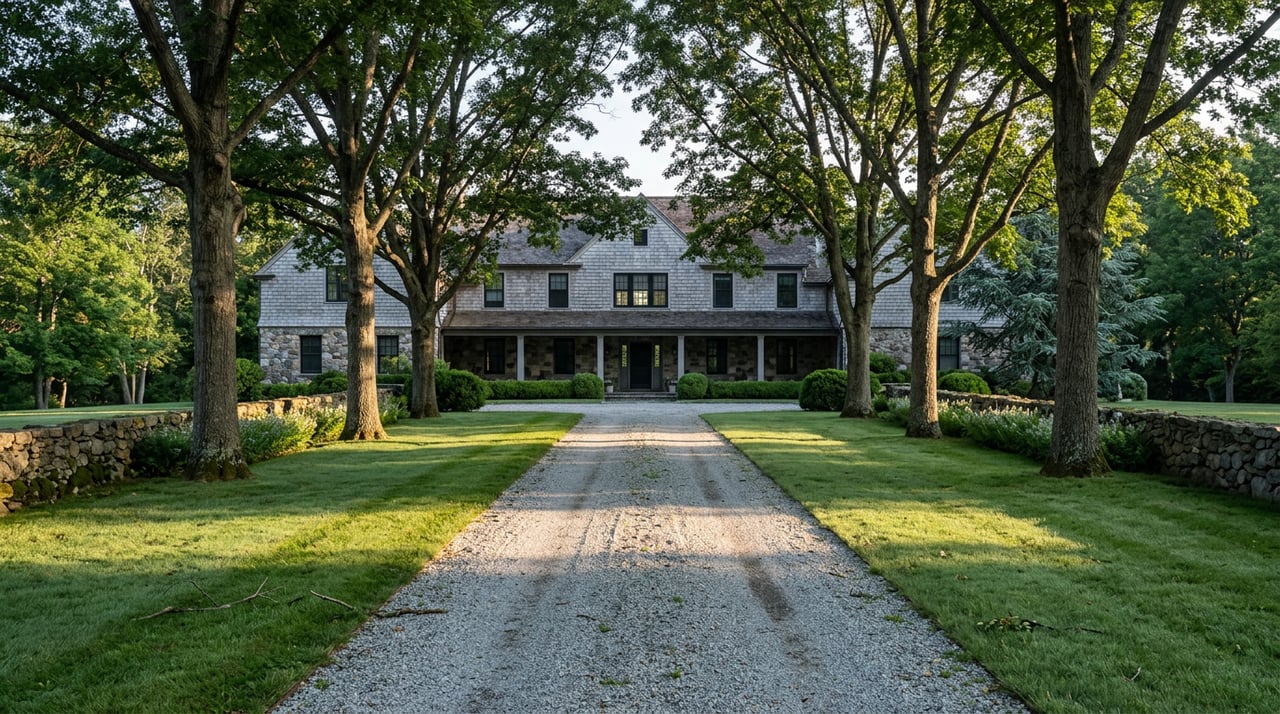
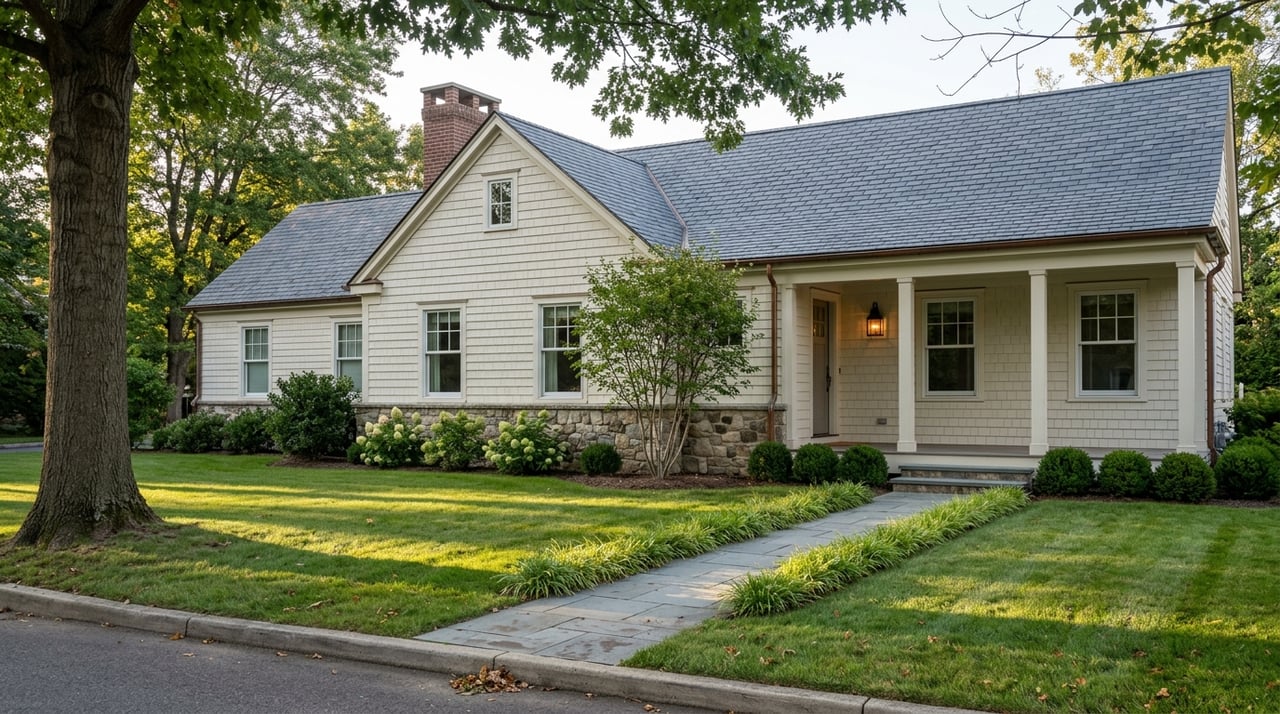
If you enjoy homes with personality, Douglaston offers a wide mix of architectural styles without feeling visually chaotic. That is part of what makes the neighborhood so appealing. The homes vary, but the overall scale, setbacks, trees, and street pattern tie everything together.
In Douglas Manor, historical sources highlight an eclectic early 20th-century mix that includes:
- Queen Anne
- Colonial
- Tudor
- Mediterranean Revival
- Arts & Crafts
The area also has a notable Arts & Crafts presence, with examples associated with Gustav Stickley and Josephine Wright Chapman. In Douglaston Hill, preservation materials point to neo-Colonial work along with Queen Anne, Shingle, Tudor, and Arts & Crafts influences.
Why the Streetscape Feels So Cohesive
Part of Douglaston’s charm comes from early design rules that shaped how homes met the street. In Douglas Manor, deed restrictions controlled setbacks, density, and lot size before the city adopted its 1916 zoning rules.
Those restrictions also limited fences beyond the front building line and encouraged hedges instead. That helped create the open, green, shared feeling many people notice when walking through the neighborhood today.
The Waterfront Is a Major Part of Life Here
Douglaston’s setting along Little Neck Bay is one of its most memorable features. Shore Road is the signature scenic route, and city materials have described it as a hidden gem with sweeping bay views.
The Douglas Manor Association has said the road was designed in 1906 as a promenade where neighbors walk and meet. That detail helps explain why the waterfront here feels social and residential at the same time, rather than simply scenic.
Shore Road and the Bay Edge
The waterfront is beautiful, but it is also environmentally sensitive. A recent shoreline stabilization project along Shore Road underscores that erosion and resiliency are part of living at the bay’s edge.
That balance between beauty and environmental reality is important if you are drawn to waterfront-adjacent living. The scenery is a real asset, but it exists within a shoreline system that has changed over time.
Natural Areas Nearby
The ecological story around Douglaston adds even more depth to the neighborhood. According to the city, Little Neck Bay once supported a commercial shellfishery, while later rail, parkway, and highway construction altered the shoreline and wetlands.
You can still see the area’s connection to nature in nearby open spaces. City Planning maps preserved open-space areas near Udall’s Cove and Little Neck Bay, reinforcing that parts of the waterfront edge remain natural rather than fully built out.
Parks and Open Space Add Breathing Room
Douglaston benefits from access to large and varied open spaces. That matters whether you value walking trails, scenic views, golf, or simply a stronger sense of separation from denser city surroundings.
Alley Pond Park is one of the area’s biggest assets. NYC Parks describes it as the second-largest park in Queens, with wetlands, trails, a nature center, and abundant bird life.
Douglaston Park Golf Course is another major amenity. NYC Parks identifies it as a 104.6-acre public 18-hole course selected for its rolling, scenic terrain.
These open spaces help shape the neighborhood’s feel. Even when you are within city limits, Douglaston often reads as calmer, greener, and more spacious than many buyers expect in Queens.
The Station Area Supports the Village Feel
A neighborhood does not feel village-like on charm alone. It also needs a daily-life center, and in Douglaston that role belongs to the station area.
The Long Island Rail Road’s Douglaston station on the Port Washington Branch anchors access to the city. MTA information shows direct service to Grand Central or Penn Station, and the station includes ramps and ticket machines.
Why Transit History Still Matters
Rail service reached the area in 1866, and the stop took the name Douglaston in the late 1860s. A local station history notes that the first Queen Anne-style depot opened in 1887 with landscaped grounds.
That commuter-rail legacy helps explain why the neighborhood feels different from a typical urban grid. The rhythm of Douglaston has long been shaped by rail access, residential planning, and a modest local center rather than large commercial corridors.
Station Plaza as a Community Hub
Near the rail stop, Douglaston Station Plaza gives the neighborhood a small civic gathering place. The city notes that the plaza is used for events such as movie nights and farmers markets.
That detail may sound small, but it says a lot about daily life. In a neighborhood known for historic homes and bayfront scenery, these shared public spaces help reinforce a true local identity.
What Buyers Often Notice First
When people first explore Douglaston, they usually notice a few things right away. The streets feel quieter, the housing stock has more architectural variation than expected, and the waterfront presence gives the area a different mood from inland Queens neighborhoods.
They also tend to notice that Douglaston is not trying to be everything at once. It is residential first, with a smaller commercial node near the station and a strong relationship to its natural surroundings and landmarked areas.
How to Think About Douglaston as a Home Search
If you are considering a move here, it helps to compare sections of the neighborhood rather than treating all of Douglaston as interchangeable. A home in Douglas Manor may offer a different streetscape and historic context than a property closer to the station or farther inland near Douglaston Hill.
That is where local guidance becomes especially useful. In a neighborhood where setting, historic character, and micro-location all influence the experience of a home, details matter.
Whether you are drawn to architectural character, a waterfront backdrop, or direct rail access within city limits, Douglaston offers a combination that is hard to replicate. If you are considering buying or selling in Douglaston or nearby North Shore and Queens markets, Irene Renee Rallis offers the polished, hands-on guidance and market insight that help you move with confidence.
FAQs
What is historic about Douglaston, Queens?
- Douglaston includes notable historic sections such as Douglas Manor, a 1906 planned railroad and garden suburb, and Douglaston Hill, a landmark area with wood-frame homes built between 1890 and 1930.
What architectural styles are found in Douglaston?
- Douglaston features an eclectic mix of Queen Anne, Colonial, Tudor, Mediterranean Revival, Arts & Crafts, Shingle, and neo-Colonial influences, with a cohesive look created by scale, setbacks, trees, and winding streets.
What is the waterfront like in Douglaston?
- Douglaston’s waterfront along Little Neck Bay is known for scenic views, especially along Shore Road, which was planned as a promenade and remains an important part of the neighborhood’s character.
What parks and open spaces are near Douglaston?
- Nearby open-space assets include Alley Pond Park, which offers wetlands, trails, a nature center, and bird life, as well as the 104.6-acre Douglaston Park Golf Course.
How do you get from Douglaston to Manhattan?
- The LIRR Douglaston station on the Port Washington Branch provides direct service to Grand Central or Penn Station, making city access one of the neighborhood’s practical advantages.
Why does Douglaston feel like a village?
- Douglaston’s village feel comes from its historic planning, winding streets, tree-lined residential blocks, small station-area commercial core, waterfront promenade, and community gathering spaces like Douglaston Station Plaza.